TALKS, WORKSHOPS & PRACTICAL LEARNING
A love of dogs.
Room to learn.
Discover the stories. Question what you see. Learn how to make a difference.
Enjoy an entertaining trip around the world, explore your own dog’s behaviour or work through a shelter case. Bring your curiosity; we’ll turn it into something you can use.
For dog owners, families, community groups and learners at every stage—including students of animal care and welfare.
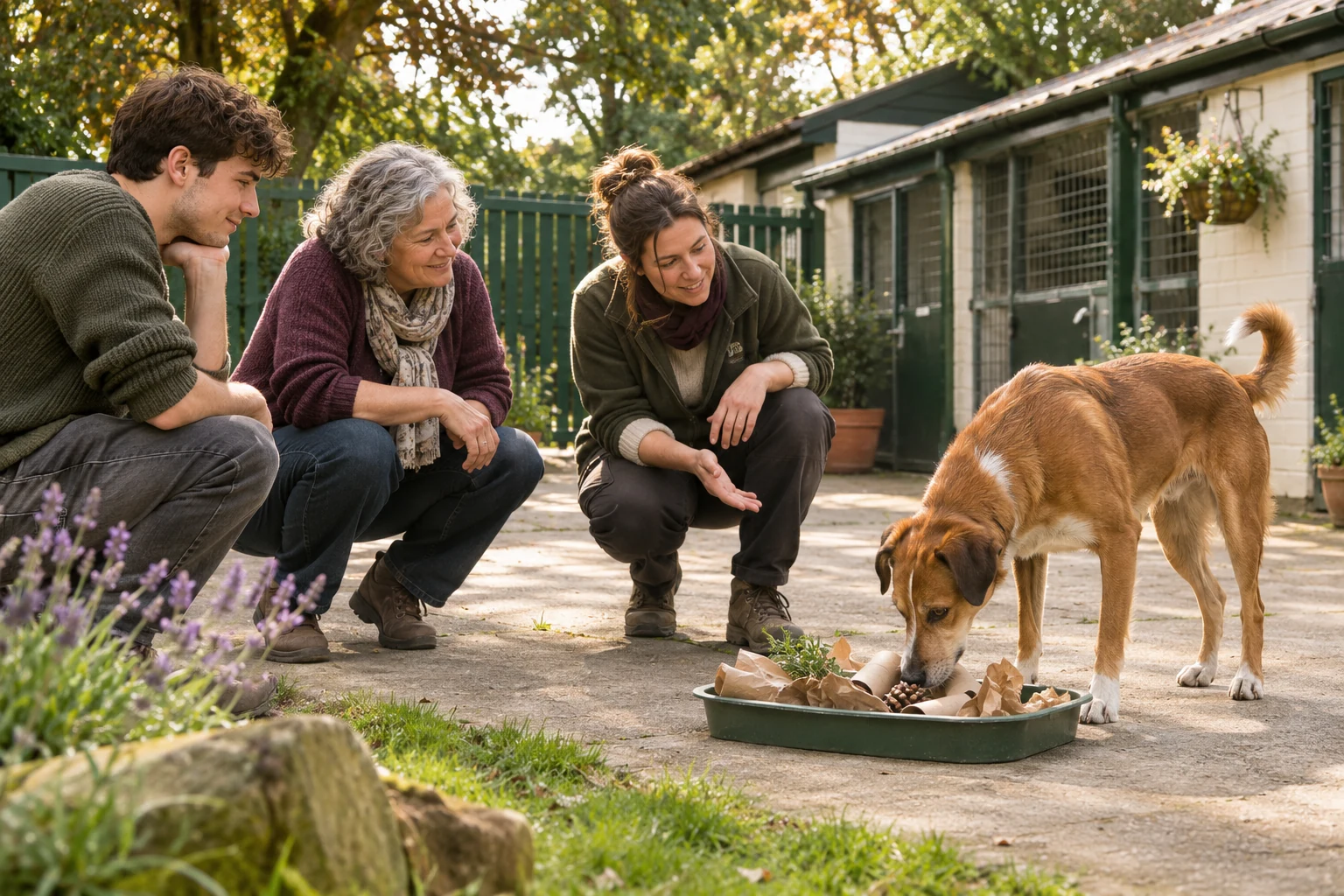
ENJOYMENT WITH PURPOSE
Start with curiosity.
Grow what you can do.
Come for an enjoyable talk, build confidence with a new subject or take your learning further. We can shape a bespoke session or course from the material, agreeing the pace, depth and outcomes around your group. You can join in without a career in mind.
- NOTICE
Identify & describe.
Spot a clue. Name what you notice. Describe what a dog actually does.
- MAKE CONNECTIONS
Explain & apply.
Connect a story with a need. Use what you learn to suggest a thoughtful response.
- TAKE IT FURTHER
Compare, justify & create.
Weigh up evidence, explain a decision and build a plan you can review and adapt.
If conventional schooling has been difficult, a shared interest in dogs can offer another way to begin. We can work with your organiser or provider to shape the steps, activities and support.
Try a one-minute shelter case
A SMALL EXAMPLE OF HOW WE LEARN
Notice first.
Then ask why.
A visitor approaches a kennel. The dog takes two steps back and turns their head away. You haven’t seen this dog before.
Which note tells the next carer what actually happened?
Choose a note to explore the reasoning.
A small change in how we describe a dog can change the questions we ask—and the care we consider next.
Explore this kind of learning
For community groups, adult audiences, workplaces, schools and colleges.
01 / THE SHARED ADVENTURE
Around the World
in 80 Dogs
Pack your curiosity. The dogs will take care of the itinerary.
Follow remarkable breeds through the places and working lives that shaped them. Handle the clues, share your guesses and enjoy the stories. Then bring the adventure back to the shelter: what might this individual dog enjoy, need or find difficult? Discover why enrichment and thoughtful care matter wherever a dog comes from.
Learning outcomes
By the end of the agreed session, participants should be able to:
- Identify a featured breed and connect it with a place or working role.
- Explain how history offers clues while the individual dog still matters.
- Suggest an enrichment idea and explain the individual need it could meet.
02 / BEHIND THE KENNEL DOOR
Inside the Shelter:
From Rescue to Rehoming
Every dog has a story. Good care begins by finding out what it is.
Start with an individual dog’s story. Identify what we’ve been told, describe what we can see and decide what we still need to ask. Compare possible responses and explain what you would do next.
For students of animal care and welfare, these cases connect study with decisions made in a shelter. Stories and discussion offer an accessible first step; more detailed evidence gives experienced learners room to question assumptions and justify their decisions.
Learning outcomes
By the end of the agreed session, participants should be able to:
- Identify reported history, observation and interpretation in a case.
- Compare possible responses to an individual dog’s needs.
- Use case evidence to explain a thoughtful priority.
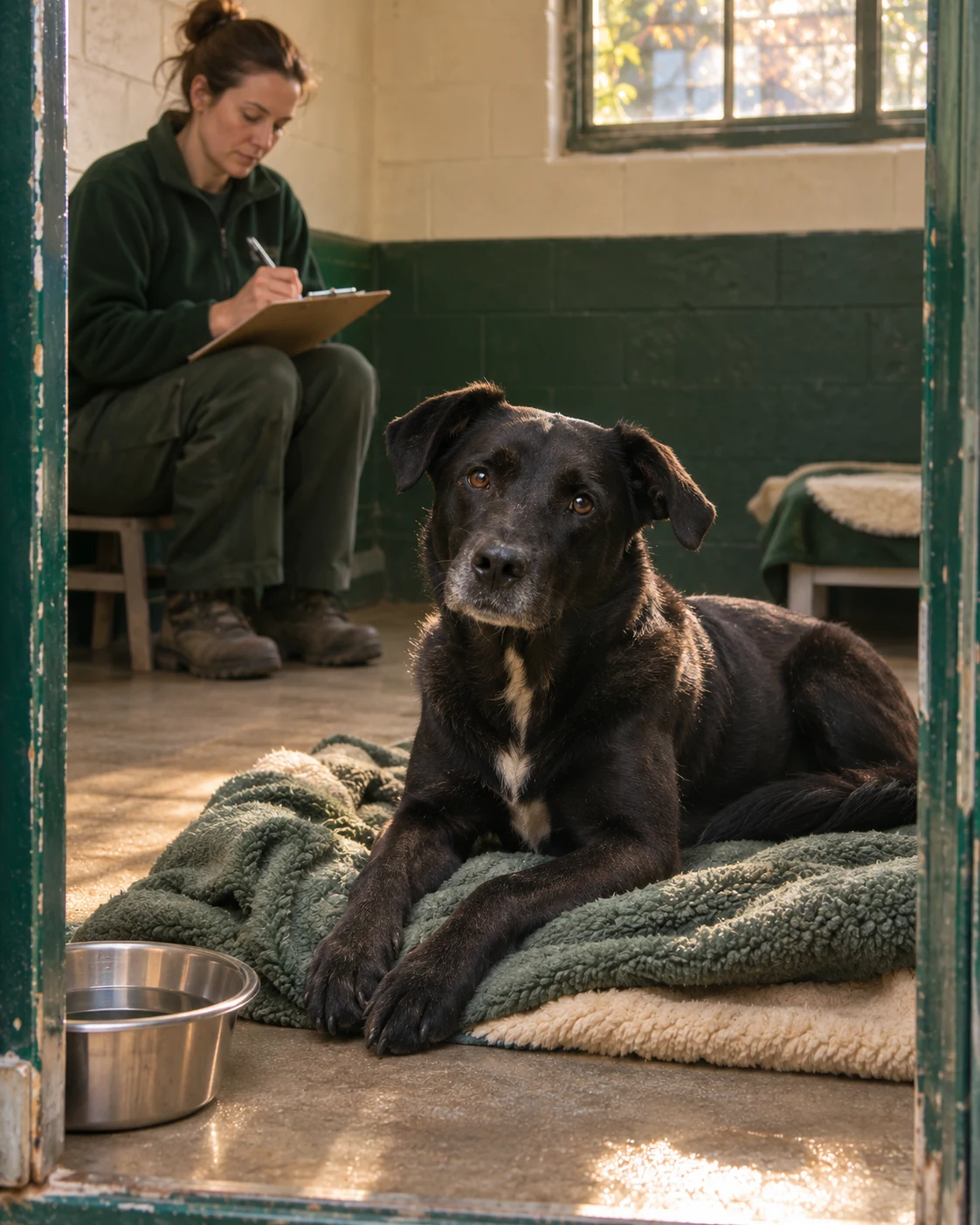
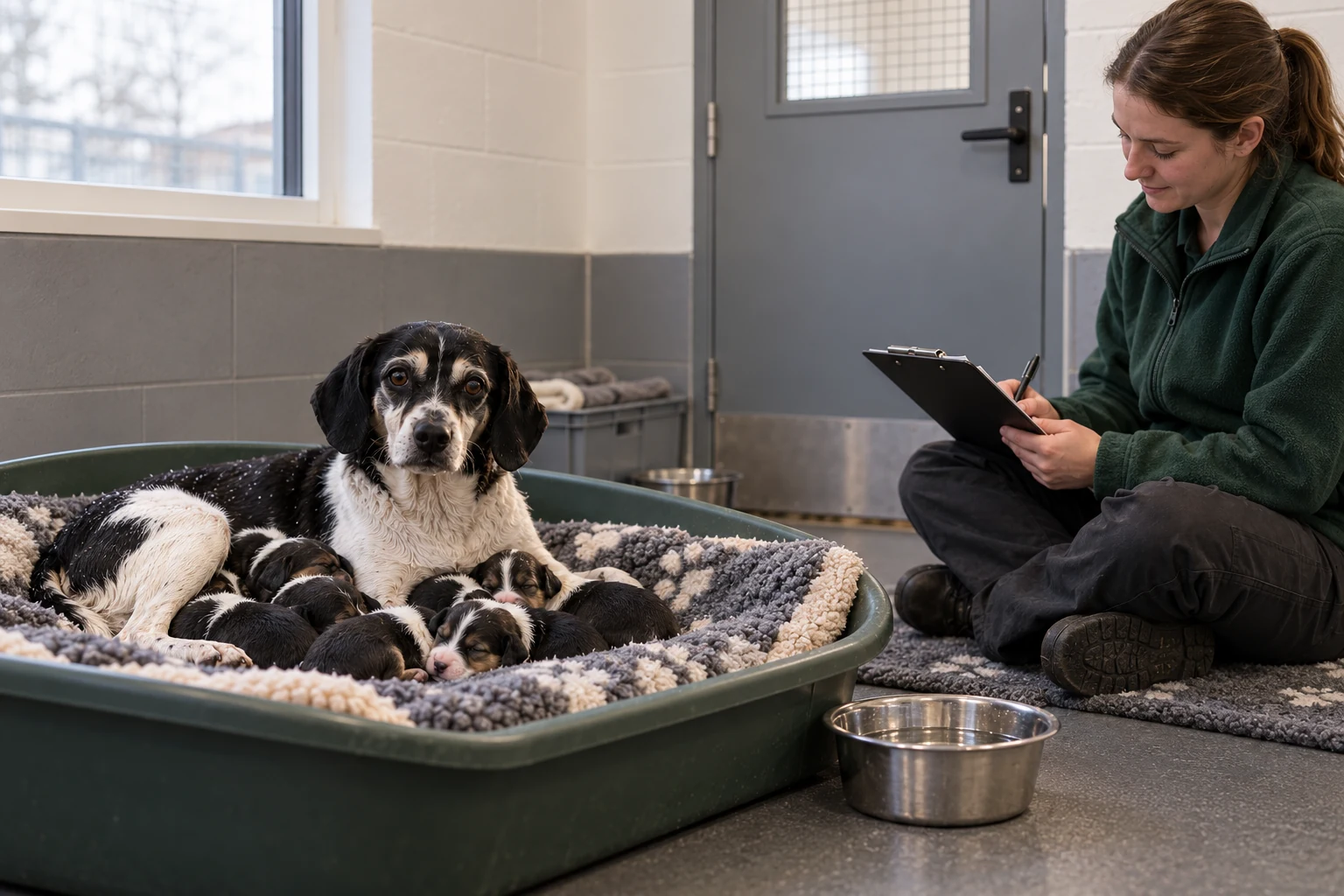
Enrichment, rehabilitation and the volunteer’s contribution connect the journey.
03 / FOLLOW THE WHOLE JOURNEY
The Incredible
Journey
The right information, in the right hands, can change what happens next.
Ready to follow the evidence further? Build an intake record, compare assessment information and justify a care or matching plan. Follow the dog towards a new home, then review what aftercare tells us.
Explore a standalone module or a connected programme. The same cases can support different levels of work—from describing a need to evaluating evidence and creating a plan. Your group’s starting points shape the challenge.
Learning outcomes
By the end of the agreed module or programme, learners should be able to:
- Record useful evidence and create a clear handover.
- Build and justify a care or matching plan.
- Review new information and adapt the support offered.
04 / DOG OWNERS & CURIOUS PEOPLE · CORNWALL
Know the dog
beside you.
Understanding Dogs: Behaviour Profiling
Their history, their habits, the things they notice before we do. What might everyday behaviour tell us about the dog who shares our home?
Building on classes I’ve delivered before, I can bring a small group together in the St Austell area when there is enough interest. We’ll look at the whole dog and use what we notice to guide thoughtful care and training.
Learning outcomes
For an agreed class, participants should be able to:
- Observe body language and describe the surrounding situation.
- Explain how breed history and life experience can inform our understanding.
- Choose a useful enrichment or training focus and explain why it fits.
Dates, venue, group size and cost are agreed before booking. Practical work with dogs is considered only after the venue, group and each dog’s suitability have been agreed.
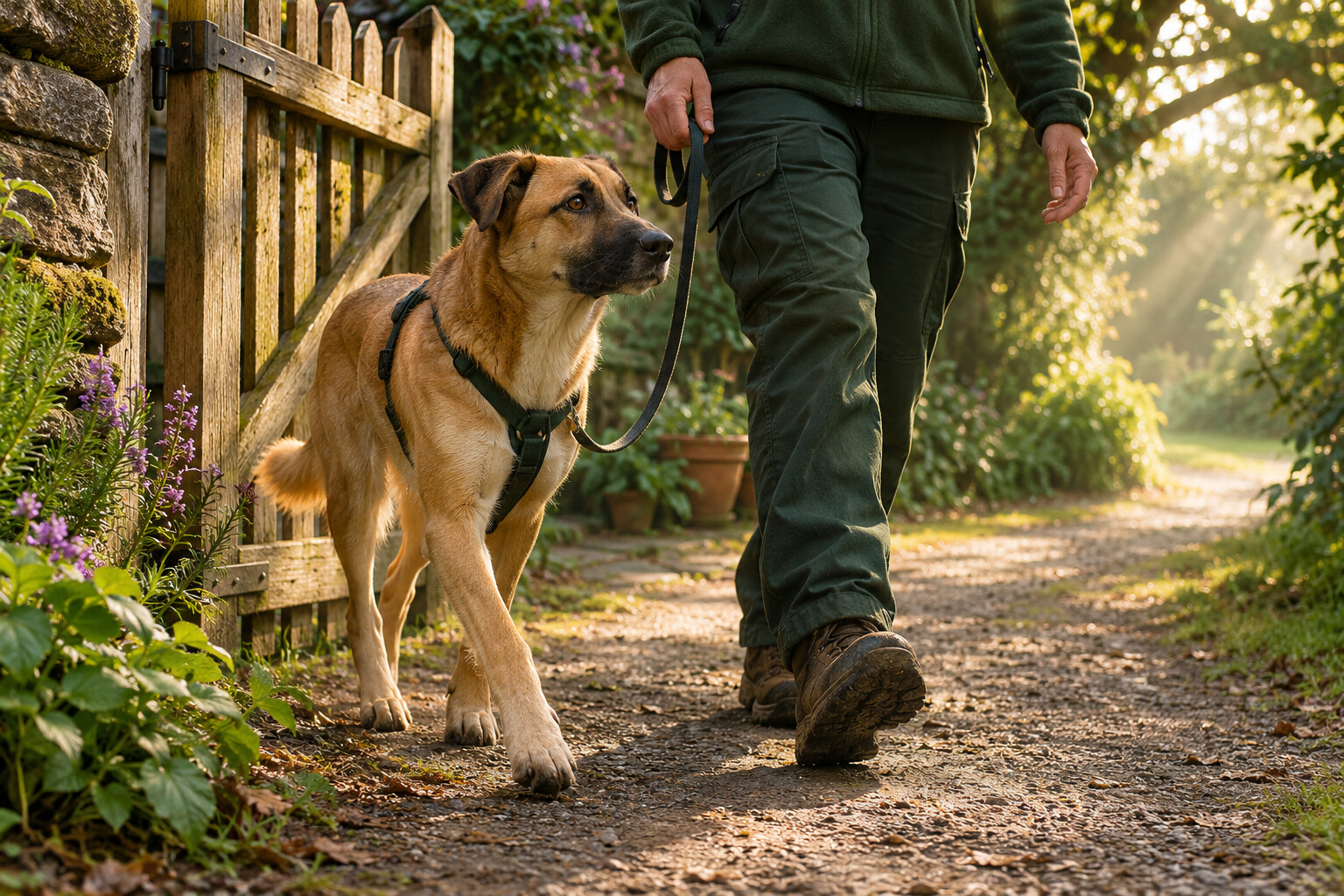
05 / WORKING & VOLUNTEERING WITH DOGS
You can start
from where you are.
Care is an interest you can put into practice.
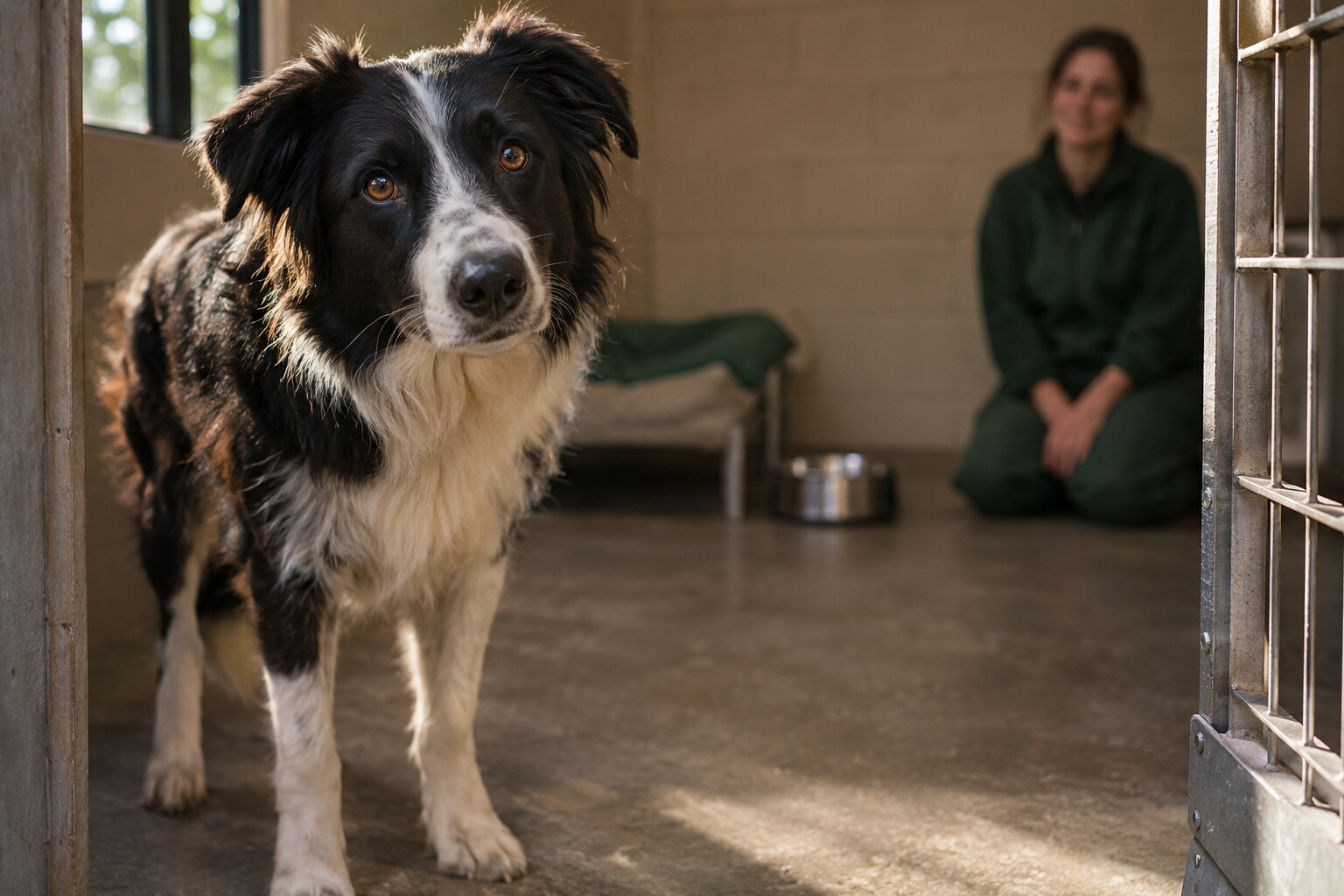
You might be choosing your future, changing direction or already volunteering. Begin with the daily responsibilities of shelter life: observation, communication, enrichment and working as a team.
For shelter staff and volunteers, we’ll agree a focused session that complements your role and your organisation’s procedures.
Learning outcomes
For an agreed introductory session, participants should be able to:
- Describe the responsibilities behind daily shelter care.
- Record an observation clearly and explain who needs to know.
- Identify a suitable next step in learning or volunteering.
06 / SCHOOL READINGS & AUTHOR VISITS
A story can
open a door.
Meet a character. Ask a question. Imagine what happens next.
An age-appropriate reading can make room for conversations about dogs, friendship and second chances. We can introduce a character, share questions and follow the story with a drawing, discussion or short piece of writing.
Learning outcomes
Adapted to the children’s ages and starting points:
- Recall a character or event from the reading.
- Describe a character’s feelings and suggest a kind response.
- Create a drawing, spoken story or short piece of writing.
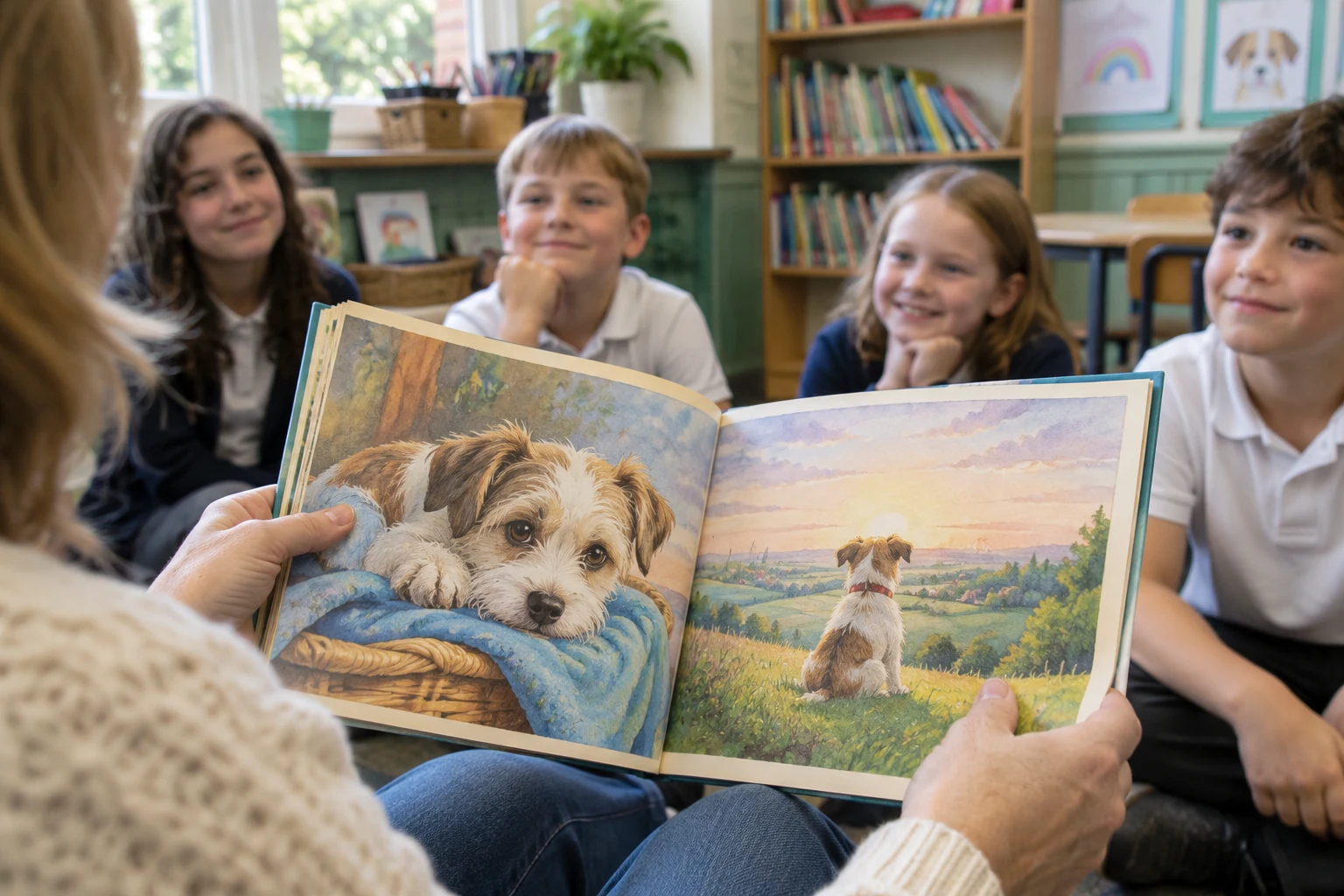
Readings are shaped around the class, their questions and their starting point.
LET’S MAKE IT FIT
Your group.
Your starting point.
You bring the people and the questions. We’ll discuss what would be useful, accessible and enjoyable for them.
Who is the learning for?+
Dog owners, children and parents, community and WI groups, workplaces, schools and students of animal care and welfare. There is room for people who find mainstream schooling—or schooling in general—difficult. We discuss the people and their interests first, then agree the content, pace, group size and ways to participate with their provider or organiser.
How do we agree outcomes and access needs?+
Tell me about the learners and their starting points. We’ll choose clear actions—such as identify, explain, compare, justify or create—and suitable ways to show learning. That might mean speaking, sorting evidence, discussing a case, drawing or writing. We can agree shorter activities, breaks and the level of reading with you, and connect outcomes with your programme where appropriate.
Can you build something around our group?+
Yes. The material covers intake, assessment, enrichment, rehabilitation, rehoming, aftercare and the contribution of volunteers, alongside talks and storytelling. We can select a useful starting point, combine topics and develop a bespoke session or sequence. The interest can stay the same while the depth, activities and learning outcomes change. We’ll agree what is ready, the support needed and the scope before booking.
What does it cost, and what do we need?+
I’ll confirm the content, duration, group size, venue and equipment arrangements, any travel and the full price before you book. Local classes begin with expressions of interest. You can ask about a session before you have a date.
Is this an accredited qualification?+
This is tailored, non-accredited learning. Standalone sessions and adaptations are developed in stages; we’ll confirm what is ready and suitable for your group. My teaching qualification is the Level 3 Award in Education and Training.
A LITTLE CURIOSITY IS ENOUGH
A question is a
good beginning.
What would you like to discover—or help others learn? Bring me your group, a question about your dog, or an idea for a talk. We can shape a useful starting point together.
Plan something for you or your group Based in St Austell, Cornwall · A simple email is always welcome.